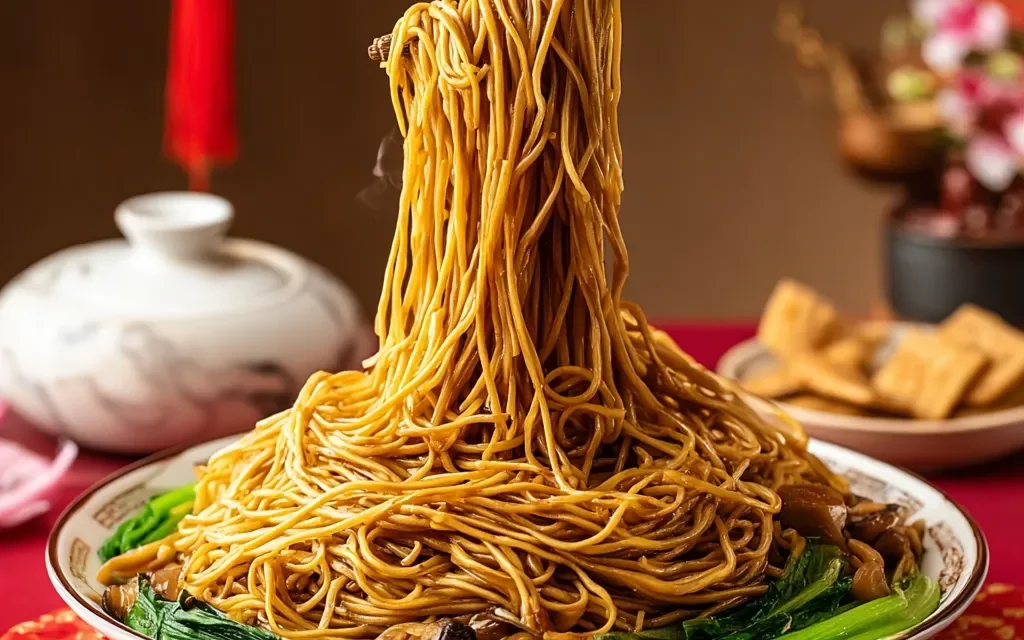
I can still remember the first time my grandma made her famous Longevity Noodles (Yi Mein) for the Lunar New Year. The aroma of the sizzling noodles and fresh veggies would fill the entire house, making our mouths water in anticipation. As we gathered around the table, grandma would explain how the long noodles symbolized a long and prosperous life – a tradition she was eager to pass down to our family.
Years have gone by, but that memory of sitting together, slurping up those delicious Longevity Noodles, is as vivid as ever. It’s a dish that brings us closer, reminding us of our cultural roots and the importance of celebrating life’s milestones. That’s why this recipe has become a staple in my own kitchen, and why I know it will become a go-to for you too.
Table of Contents
Why This Longevity Noodles (Yi Mein) Recipe Will Become Your Go-To
The Secret Behind Perfect Longevity Noodles (Yi Mein)
There’s something truly special about Longevity Noodles (Yi Mein) that sets them apart from other Asian noodle dishes. It’s not just the long, slippery strands that symbolize a long life – it’s the perfect balance of flavors and textures that make this recipe an absolute delight. The key is in the simple yet flavorful sauce, which coats the noodles with a savory-sweet blend of soy sauce, rice vinegar, and toasted sesame seeds.
What really makes this dish shine, though, is the addition of fresh, crunchy vegetables. The mix of broccoli, carrots, and snow peas not only adds pops of color and texture, but also provides a nutritional boost that makes this meal truly wholesome. Plus, the quick cooking time means you can have this delicious dish on the table in just 20 minutes – perfect for busy weeknights or when you’re craving something comforting and satisfying.
Essential Ingredients You’ll Need
The beauty of this Longevity Noodles (Yi Mein) recipe lies in its simplicity. Let’s take a closer look at the key ingredients:
- 8 ounces longevity noodles (yi mein): These long, thin noodles are the star of the show, symbolizing a long and prosperous life. They have a delightfully chewy texture that stands up well to the flavorful sauce.
- 2 cups mixed fresh vegetables (such as broccoli, carrots, and snow peas): The vibrant veggies not only add nutritional value, but also lend a satisfying crunch and color to the dish.
- 2 tablespoons soy sauce: This umami-rich ingredient forms the backbone of the sauce, providing depth of flavor.
- 1 tablespoon rice vinegar: A touch of acidity from the vinegar helps balance the sweetness and creates a beautifully balanced sauce.
- 1 teaspoon sesame oil: The nutty, toasted flavor of the sesame oil is the perfect finishing touch, tying all the flavors together.
- 1 clove garlic, minced, and 1 teaspoon grated ginger: These aromatic ingredients add a subtle warmth and complexity to the dish.
- 1 tablespoon toasted sesame seeds: Sprinkled on top, the sesame seeds provide a delightful crunch and extra nutty flavor.
Step-by-Step Longevity Noodles (Yi Mein) Instructions
Preparing Your Longevity Noodles (Yi Mein)
With a total prep and cook time of just 20 minutes, this Longevity Noodles (Yi Mein) recipe is the perfect solution for a quick, healthy meal. All you’ll need is a large pot, a wok or skillet, and a few simple kitchen tools.
1- Start by bringing a large pot of water to a boil. Once the water is at a rolling boil, add the 8 ounces of longevity noodles (yi mein) and cook according to the package instructions, usually about 5-7 minutes, until the noodles are tender yet still have a slight bite to them.
2- While the noodles are cooking, heat a wok or large skillet over medium-high heat. Add a drizzle of oil, then stir-fry the 2 cups of mixed fresh vegetables (broccoli, carrots, and snow peas) for 3-4 minutes, until they’re crisp-tender.
3- Once the noodles are cooked, drain them and add them to the wok or skillet with the stir-fried veggies. Pour in the 2 tablespoons of soy sauce, 1 tablespoon of rice vinegar, and 1 teaspoon of sesame oil, then toss everything together until the noodles are evenly coated.
4- Toss in the minced garlic and grated ginger, and continue stir-frying for another 2-3 minutes, until the noodles are heated through and the flavors have melded together.
5- Finally, sprinkle the 1 tablespoon of toasted sesame seeds over the top, and season with salt and pepper to taste.
6- Serve your delicious Longevity Noodles (Yi Mein) hot, garnished with any extra sesame seeds or chopped scallions, if desired. Enjoy this lucky and prosperous dish with your loved ones!
Pro Tips for Success
- Use fresh, high-quality longevity noodles (yi mein) for the best texture and flavor. If you can’t find them, you can substitute with other long, thin Asian noodles.
- Be sure to cook the noodles al dente, as they’ll continue to soften as they sit in the sauce. This will prevent them from becoming mushy.
- Adjust the cooking time of the vegetables based on their size and texture. Harder veggies like carrots may need a minute or two longer than the softer ones.
- Don’t be afraid to play around with the vegetable mix-ins. Snow peas, bean sprouts, and mushrooms also make great additions.
- For extra flavor, try adding a splash of Shaoxing wine or a drizzle of chili oil to the sauce.
- Leftovers can be stored in the refrigerator for up to 3 days. Simply reheat in a skillet or the microwave before serving.
Serving and Storing Your Longevity Noodles (Yi Mein)
Perfect Pairings for Longevity Noodles (Yi Mein)
This Longevity Noodles (Yi Mein) recipe is the perfect main dish for a family-style meal, as it serves 4 people. For a complete and satisfying feast, consider pairing it with some steamed or sautéed greens, such as bok choy or Chinese broccoli. A light, refreshing salad would also make a great side.
As for beverages, a crisp, cold beer or a glass of aromatic jasmine tea would be delightful companions to this noodle dish. And of course, no Lunar New Year celebration is complete without a steaming cup of traditional Chinese tea!
Storage and Make-Ahead Tips
Longevity Noodles (Yi Mein) are best enjoyed fresh, but they can also be stored and reheated with great success. To store, simply place the cooked noodles and vegetables in an airtight container and refrigerate for up to 3 days.
When you’re ready to enjoy the leftovers, simply reheat the noodles in a skillet over medium heat, adding a splash of water or broth to help rehydrate them. You can also microwave the noodles in 30-second intervals, stirring in between, until heated through.
For make-ahead convenience, you can prep the vegetables ahead of time and store them in the fridge. When you’re ready to cook, simply toss the veggies with the cooked noodles and the sauce ingredients. This way, you can have a delicious Longevity Noodles (Yi Mein) meal on the table in just 10 minutes.
Variations and Dietary Adaptations for Longevity Noodles (Yi Mein)
Creative Longevity Noodles (Yi Mein) Variations
While the classic Longevity Noodles (Yi Mein) recipe is a real winner, there are plenty of ways to mix things up and put your own spin on this dish.
For a heartier meal, try adding some sliced chicken, beef, or shrimp to the stir-fry. You can also experiment with different veggie combinations, such as bell peppers, mushrooms, or zucchini.
If you’re feeling adventurous, you can even try swapping out the traditional longevity noodles for soba or udon noodles, or even try substituting with spiralized zucchini or sweet potato noodles for a low-carb option.
And for a touch of sweetness, a sprinkle of brown sugar or a drizzle of honey can complement the savory flavors beautifully.
Making Longevity Noodles (Yi Mein) Diet-Friendly
Fortunately, this Longevity Noodles (Yi Mein) recipe is quite versatile and can be easily adapted to suit a variety of dietary needs.
For a gluten-free version, simply use gluten-free soy sauce and swap the longevity noodles (yi mein) for rice noodles or quinoa-based noodles. This will make the dish suitable for those following a gluten-free lifestyle.
If you’re looking to make it vegan, simply omit the soy sauce and replace it with a gluten-free tamari or coconut aminos. You can also use a toasted sesame oil substitute, such as avocado or olive oil, to maintain the nutty flavor.
And for a lower-carb option, as mentioned earlier, you can use spiralized zucchini or sweet potato noodles in place of the traditional longevity noodles. Just be sure to adjust the cooking time accordingly.
No matter your dietary preferences, this Longevity Noodles (Yi Mein) recipe can be tailored to suit your needs, while still delivering the same delicious, satisfying flavors.
Frequently Asked Questions
Q: Can I substitute the longevity noodles (yi mein) with another type of noodle?
A: Yes, you can definitely use other types of long, thin Asian noodles, such as soba or udon, in place of the longevity noodles (yi mein). Just keep in mind that the cooking time may vary slightly.
Q: How do I know when the noodles are cooked properly?
A: The key is to cook the noodles al dente, which means they should still have a slight bite to them. This usually takes around 5-7 minutes in boiling water. You’ll know they’re done when they’re tender but not mushy.
Q: Can I make this recipe ahead of time?
A: Absolutely! The cooked noodles and vegetables can be stored separately in the refrigerator for up to 3 days. When you’re ready to serve, simply reheat the noodles and vegetables together in a skillet or the microwave.
Q: How many servings does this recipe make?
A: This Longevity Noodles (Yi Mein) recipe serves 4 people. If you need to feed a larger crowd, you can easily double or triple the ingredients.
Q: What can I do if the noodles start to stick together?
A: If the noodles start to clump or stick together, try adding a bit of oil or water to the pan and gently tossing them to separate the strands. You can also drizzle a little sesame oil over the top to help prevent sticking.

Longevity Noodles (Yi Mein)
- Total Time: 20
- Yield: 4 servings
Description
Discover the secrets of Longevity Noodles (Yi Mein), a beloved Chinese dish that nourishes the body and soul. This express version of the traditional recipe is packed with fresh vegetables and a savory sauce, making it a delicious and healthy meal.
Ingredients
– 8 ounces longevity noodles (yi mein)
– 2 cups mixed fresh vegetables (such as broccoli, carrots, and snow peas)
– 2 tablespoons soy sauce
– 1 tablespoon rice vinegar
– 1 teaspoon sesame oil
– 1 clove garlic, minced
– 1 teaspoon grated ginger
– 1 tablespoon toasted sesame seeds
– Salt and pepper to taste
Instructions
1. Bring a large pot of water to a boil. Add the longevity noodles and cook according to package instructions, usually about 5-7 minutes, until al dente.
2. While the noodles are cooking, prepare the vegetables. Trim and slice the vegetables into bite-sized pieces.
3. In a small bowl, whisk together the soy sauce, rice vinegar, sesame oil, garlic, and ginger.
4. Drain the cooked noodles and transfer them to a large bowl. Add the sliced vegetables and the sauce mixture. Toss everything together until the noodles and vegetables are evenly coated.
5. Sprinkle the toasted sesame seeds over the top and season with salt and pepper to taste.
6. Serve the Longevity Noodles (Yi Mein) warm, garnished with additional sesame seeds if desired.
Notes
For a heartier meal, you can add cooked protein such as shrimp, chicken, or tofu. This dish can also be served chilled as a refreshing noodle salad.
- Prep Time: 10
- Cook Time: 10
- Category: Vegetarian & Vegan Mains
- Method: Stovetop
- Cuisine: Chinese
Conclusion
Longevity Noodles (Yi Mein) are a truly special dish that not only tastes delicious, but also carries deep cultural significance. With their long, slender strands and vibrant mix of vegetables, these noodles are the perfect way to celebrate life’s milestones and bring good luck and prosperity to your table.
This recipe is a true gem, combining simple, wholesome ingredients with a flavor-packed sauce that will have your family and friends raving. And with a total cooking time of just 20 minutes, it’s the perfect solution for a quick, healthy weeknight meal.
So why not give this Longevity Noodles (Yi Mein) recipe a try? I guarantee it will become a new staple in your kitchen, bringing joy, luck, and plenty of delicious noodle-slurping memories for years to come. Bon appétit!