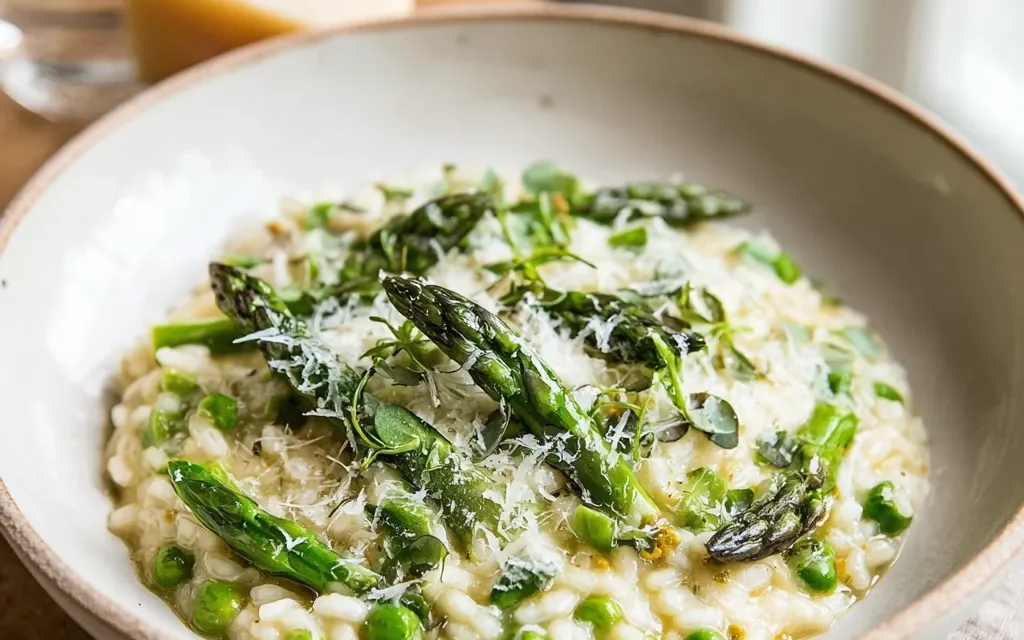
As the first tender buds of spring begin to peek out from the soil, I can’t help but crave the soothing, creamy embrace of a steaming bowl of Spring Vegetable Risotto. It’s a dish that captures the essence of the season – vibrant, fresh, and bursting with the flavors of new life. Growing up, my grandmother would make this risotto every year as the weather began to warm, and the aroma of sautéed onions and garlic would fill the kitchen, welcoming us home like a long-lost friend.
There’s something utterly magical about the way the arborio rice transforms, absorbing the rich vegetable broth and releasing its starch to create a velvety, luxurious texture. And the combination of tender asparagus, zucchini, and bell peppers – all diced to perfection – brings a symphony of color and crunch to every bite. It’s a dish that nourishes the soul as much as the body, reminding us that the simplest things in life can bring the greatest joy.
Table of Contents
Why This Spring Vegetable Risotto Recipe Will Become Your Go-To
The Secret Behind Perfect Spring Vegetable Risotto
What sets this Spring Vegetable Risotto apart is the perfect balance of flavors and textures. The key lies in the careful preparation and timing of each ingredient, allowing them to meld together seamlessly. By sautéing the onions and garlic first, you create a flavorful base that infuses the entire dish. Then, the gradual addition of the broth, one ladle at a time, coaxes the starch from the arborio rice, resulting in a creamy, velvety consistency that’s utterly addictive.
The selection of vegetables is also crucial. The asparagus, zucchini, and bell pepper not only add vibrant pops of color, but they also contribute a delightful crunch that contrasts beautifully with the silky risotto. And the final touch of Parmesan cheese and fresh parsley elevates the dish to new heights, transforming it into a symphony of flavors that dance across your palate.
Essential Ingredients You’ll Need
- 2 tablespoons olive oil: This is the foundation of the dish, providing a rich, velvety base for the risotto.
- 1 onion, diced: The onion adds depth of flavor and sweetness, serving as the aromatic backbone of the recipe.
- 3 cloves garlic, minced: Garlic is a must-have for any risotto, infusing the dish with its signature savory notes.
- 1 cup arborio rice: The key to a creamy, decadent risotto is the use of arborio rice, which releases its starch to create that irresistible texture.
- 4 cups vegetable broth: The broth is the liquid that transforms the arborio rice into a silky, luscious risotto.
- 1 cup diced asparagus: Asparagus brings a fresh, springtime flavor and a delightful crunch to the dish.
- 1 cup diced zucchini: Zucchini adds a subtle sweetness and contributes to the vibrant color palette.
- 1 cup diced bell pepper: The bell pepper provides a pop of flavor and a delightful contrast in texture.
- 1/2 cup frozen peas: The peas add a touch of sweetness and a burst of green to the dish.
- 1/2 cup grated Parmesan cheese: The Parmesan cheese lends a rich, savory note and a creamy finish to the risotto.
- 2 tablespoons chopped fresh parsley: The fresh parsley adds a bright, herbaceous note that complements the other ingredients perfectly.
- Salt and pepper to taste: Seasoning the dish with salt and pepper is crucial to bringing out the best in all the flavors.
Step-by-Step Spring Vegetable Risotto Instructions
Preparing Your Spring Vegetable Risotto
With a prep time of just 10 minutes and a cook time of 20 minutes, this Spring Vegetable Risotto is a quick and easy weeknight meal that’s sure to impress. All you’ll need is a large skillet or Dutch oven, a ladle, and a wooden spoon to create this culinary masterpiece.
1- Start by heating the olive oil in your skillet over medium heat. Once the oil is shimmering, add the diced onion and sauté until it becomes translucent and fragrant, about 3-5 minutes.
2- Next, stir in the minced garlic and continue cooking for an additional minute, being careful not to let the garlic burn.
3- Now, it’s time to add the arborio rice. Stir the rice into the onion and garlic mixture, coating each grain with the oil and allowing it to toast for about 2 minutes.
4- Gradually ladle in the vegetable broth, one cup at a time, stirring constantly and allowing the rice to absorb the liquid before adding more. This process will take about 18-20 minutes, and you’ll know the risotto is ready when the rice is tender and the texture is creamy and velvety.
5- Once the risotto is cooked, stir in the diced asparagus, zucchini, bell pepper, and frozen peas. Let the vegetables warm through, about 2-3 minutes.
6- Finally, remove the risotto from the heat and stir in the Parmesan cheese and chopped parsley. Season with salt and pepper to taste. Serve hot, garnished with additional parsley if desired.
Pro Tips for Success
1- Always use high-quality, low-sodium vegetable broth to ensure the best flavor.
2- Resist the temptation to stir the risotto constantly – a gentle, steady stirring is all you need to release the starch and create that creamy texture.
3- Be patient and take your time when adding the broth. The gradual absorption is key to achieving the perfect risotto consistency.
4- Dice the vegetables to a uniform size for even cooking and a cohesive texture throughout the dish.
Serving and Storing Your Spring Vegetable Risotto
Perfect Pairings for Spring Vegetable Risotto
This Spring Vegetable Risotto, which serves 4 people, pairs beautifully with a fresh, crisp salad and a glass of chilled white wine. The creamy, comforting nature of the risotto makes it an ideal choice for a casual spring gathering with friends, or a cozy weeknight dinner at home. For a heartier meal, consider serving it alongside grilled chicken or sautéed shrimp.
Storage and Make-Ahead Tips
Leftover Spring Vegetable Risotto can be stored in an airtight container in the refrigerator for up to 4 days. To reheat, simply add a splash of broth or water and gently warm the risotto on the stove, stirring occasionally, until it’s heated through.
For make-ahead convenience, you can prepare the risotto base (without the vegetables) up to 3 days in advance. When ready to serve, simply warm the base on the stove, then stir in the diced vegetables and finish the dish as directed in the recipe. This method allows you to enjoy the fresh, springtime flavors of the dish while cutting down on the overall prep time.
If you’d like to freeze your Spring Vegetable Risotto, it’s best to do so before adding the Parmesan cheese and parsley. Simply transfer the cooked risotto to an airtight container or freezer-safe bag and freeze for up to 3 months. When ready to serve, thaw the risotto in the refrigerator overnight and then reheat it on the stove, adding the Parmesan and parsley just before serving.
Variations and Dietary Adaptations for Spring Vegetable Risotto
Creative Spring Vegetable Risotto Variations
While this recipe is a classic, there are many ways to put your own spin on Spring Vegetable Risotto. Try substituting the asparagus for fresh peas, or swap in roasted mushrooms and caramelized onions for a heartier, more savory version. You can also experiment with different herbs, such as thyme or basil, to change up the flavor profile.
For a springtime twist, consider adding lemon zest and a splash of fresh lemon juice to brighten the dish. Or, for a touch of richness, stir in a dollop of mascarpone cheese just before serving.
Making Spring Vegetable Risotto Diet-Friendly
To make this Spring Vegetable Risotto gluten-free, simply use a gluten-free vegetable broth and swap the arborio rice for a gluten-free alternative, such as brown rice or quinoa. For a vegan version, omit the Parmesan cheese and use a plant-based grated cheese or nutritional yeast instead.
If you’re following a low-carb diet, you can reduce the amount of arborio rice and increase the proportion of diced vegetables. Additionally, you can serve the risotto over a bed of roasted cauliflower “rice” for a delicious and nutritious twist.
Frequently Asked Questions
Q: Can I substitute the vegetables in this recipe?
A: Absolutely! The great thing about Spring Vegetable Risotto is that you can easily swap in different seasonal vegetables. Try using peas, carrots, or even cherry tomatoes in place of the asparagus, zucchini, and bell pepper.
Q: How long does it take to make this risotto?
A: According to the recipe, the total time to make this Spring Vegetable Risotto is 30 minutes, with 10 minutes of prep time and 20 minutes of cook time.
Q: Can I make this risotto ahead of time?
A: Yes, you can prepare the risotto base (without the vegetables) up to 3 days in advance. When ready to serve, simply warm the base on the stove, then stir in the diced vegetables and finish the dish as directed.
Q: How many servings does this recipe make?
A: This Spring Vegetable Risotto recipe serves 4 people.
Q: What if my risotto turns out too thick or too thin?
A: If your risotto is too thick, simply add a bit more broth, one ladle at a time, until you reach the desired consistency. If it’s too thin, let it continue to simmer, stirring frequently, to allow the rice to release more starch and thicken up.
Conclusion
This Spring Vegetable Risotto is a true testament to the magic that can happen when simple, fresh ingredients come together in perfect harmony. The combination of creamy arborio rice, tender-crisp vegetables, and the savory notes of Parmesan and parsley create a dish that’s both comforting and elegant.
Whether you’re preparing it for a special occasion or simply treating yourself to a delicious weeknight meal, this Spring Vegetable Risotto is sure to become a new favorite in your recipe repertoire. So, don’t hesitate – gather your ingredients, get cooking, and experience the joy of this springtime masterpiece. And when you do, be sure to let me know how it turned out! I can’t wait to hear your thoughts.